
The AI transcriber review checklist: from machine draft to approval
Verify names, quantities, speaker assignments, uncertainty, and the final export before approving a transcript.
Read the field guide09 / EDITORIAL WORKFLOWS
A useful draft.
A deliberate review.
An AI transcriber can supply a draft, but approval should mean that someone has checked the record for its intended purpose. Keep recognition completion separate from editorial review and publication. Make uncertainty visible instead of polishing it away.
Read the complete field guideA private draft, a public quotation, and material used in consequential decisions need different release processes. Identify the intended use and who is qualified to approve it. Preserve the original machine output and create a separate reviewed version.
Microsoft’s speech-to-text transparency note describes acoustic and language-related limitations and the need to evaluate for the intended use. Use those limitations as a reason to check the source, not as an excuse to fill gaps with plausible prose.
Listen while reading. Give names, numbers, negation, and conditional statements a deliberate check. Confirm speaker assignments independently of spelling. Use a consistent notation for unclear or overlapping speech, with a reference to the relevant interval.
Apply the agreed style only after verifying the content. Distinguish editorial context from quotations and a reading transcript from a summary. Route unresolved items to someone with legitimate evidence rather than treating a guess as a correction.
Inspect the exact page or file that will be shared. Confirm the media version, speaker labels, character handling, and any redactions. Review derived summaries and task lists separately, since they can introduce interpretations not present in the transcript.
Record the approved version and any remaining limitations according to your team’s process. When a correction is published, update related outputs consistently. Use recurring errors to improve capture guidance, evaluation, or the review checklist.
Primary reference: Microsoft speech-to-text transparency note. Provider-specific details should be checked against the version and configuration you use.
MAKE THE CHOICE EXPLICIT
Preserve raw recognition and flag unresolved material.
Verify words, attribution, sensitive content, and editorial additions.
Check final exports and record the scope of the release decision.
No. Review must compare the text with the recording and check meaning, attribution, and the intended destination. A correctly spelled word can still be the wrong word.
No. Keep unsupported content unresolved and distinguish any interpretation from the source record. A fluent guess should not become a verified quotation.
KEEP EXPLORING
Verify names, quantities, speaker assignments, uncertainty, and the final export before approving a transcript.
Read the field guide
Build a representative test collection and measure the mistakes that matter beyond a headline accuracy score.
Read the field guide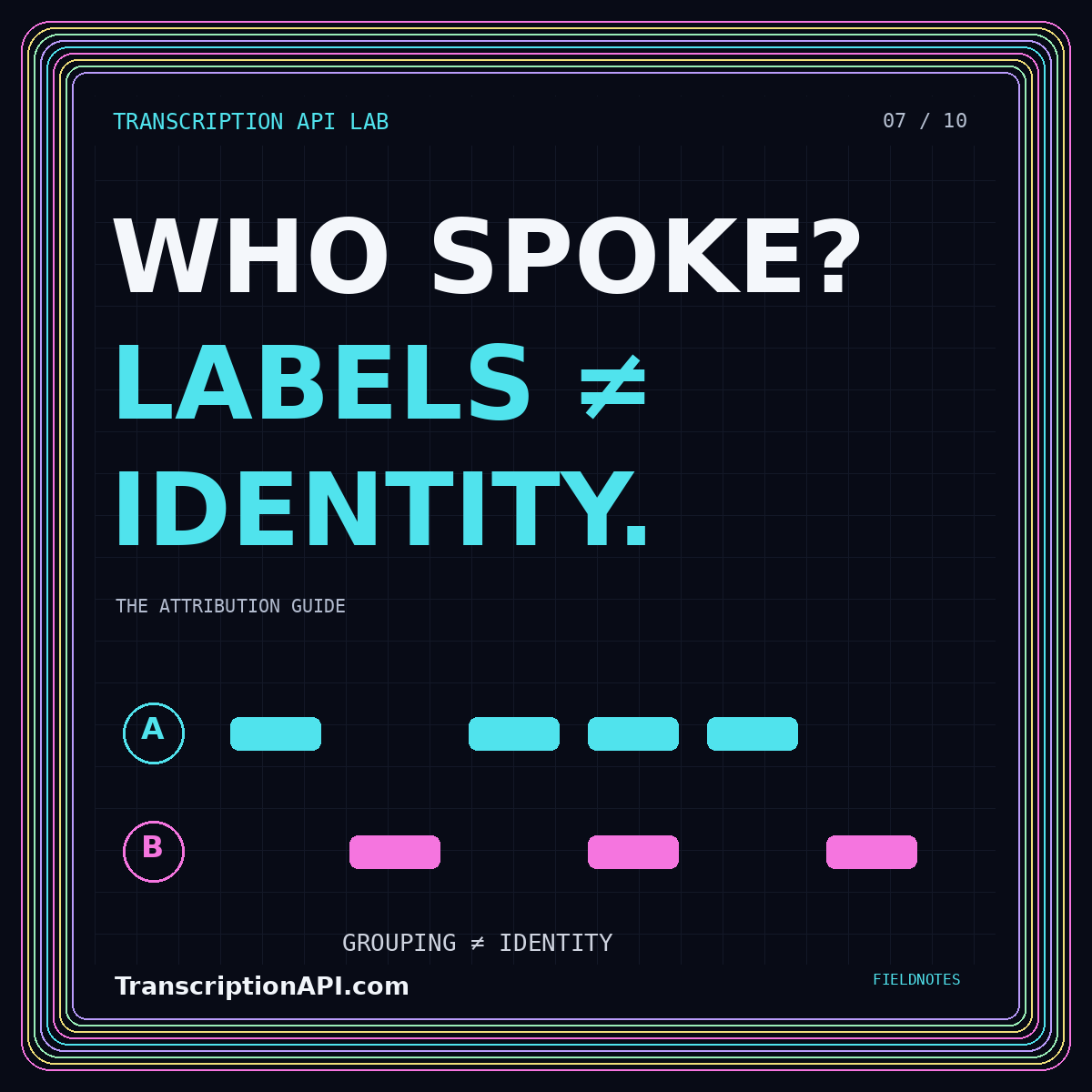
Keep recognized words, audio channels, anonymous speaker groups, and confirmed participant names separate.
Read the field guideHave a correction, a topic suggestion, or a workflow worth exploring?