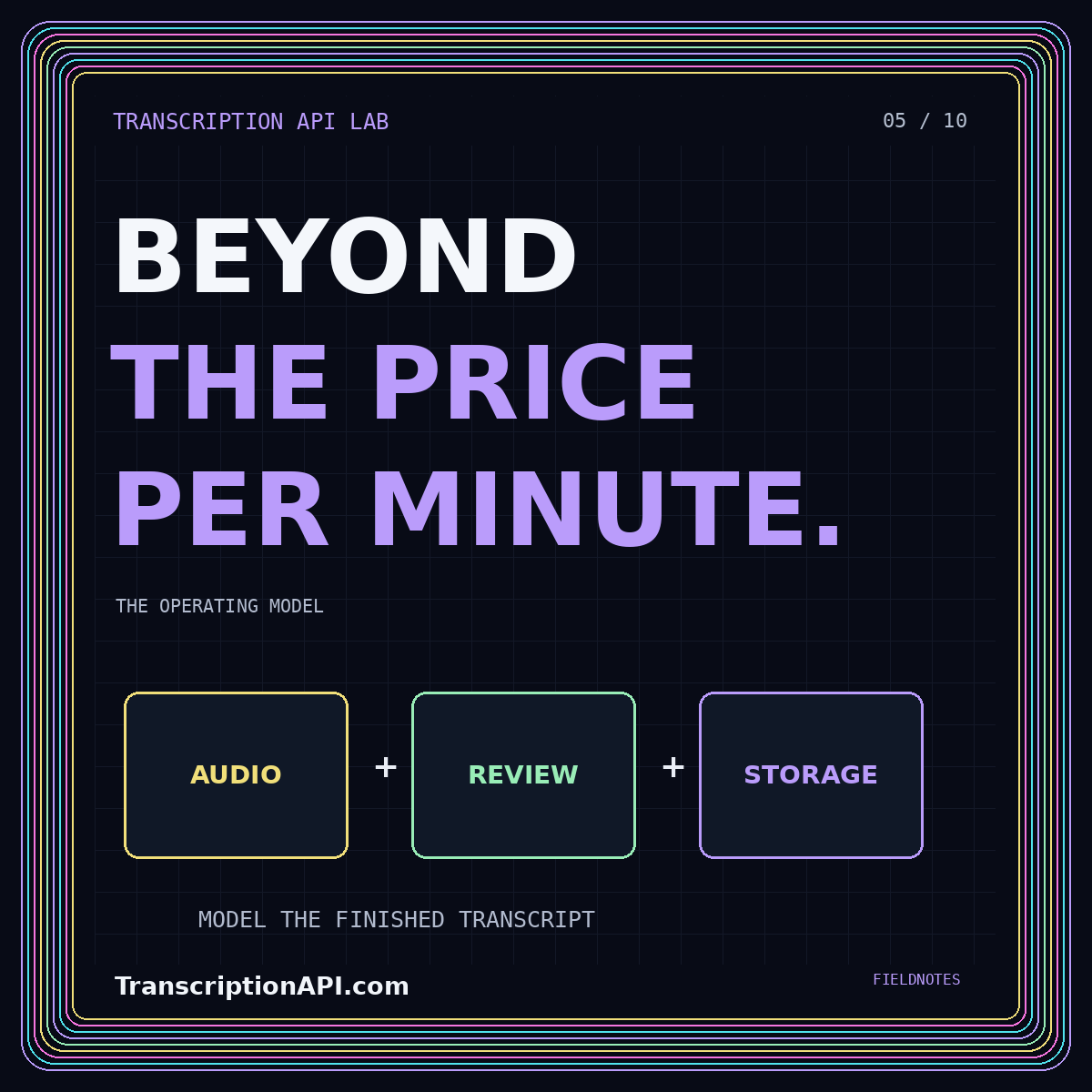
Transcription API service costs: budget for the finished transcript
Use a transparent hypothetical model to compare recognition, retries, storage, and the time spent reviewing results.
Read the field guide05 / OPERATIONS & COST
Plan for the whole
transcription workflow.
A transcription service decision includes more than a recognition rate. Define the deliverable, required quality, operational responsibilities, and total workflow cost. Keep assumptions visible so that a trial can become a defensible production decision.
Read the complete field guideA reviewed interview, a searchable meeting, and an approved caption track are different units of value. Record what the provider supplies and what your application still needs to do. Identify owners for intake validation, job recovery, review, and publication.
Compare current documentation and applicable contract terms for your selected mode and region. Separate observed behavior in a pilot from promised service terms. Do not infer a guarantee from a successful demonstration or a broad marketing label.
Track source duration, submitted duration, repeated processing, optional features, storage, and human review. Amazon Transcribe’s pricing page illustrates that service modes, regions, volume tiers, and add-ons can affect a bill; other providers have their own rules.
Use explicit hypothetical inputs while planning, then replace them with actual workload observations and current rates. Keep fixed costs separate from usage-dependent costs. A lower recognition price does not establish a lower cost for an approved final transcript.
Assign a job identifier to each attempt and a reason to each rerun. Distinguish a source-format failure from a temporary interruption. Measure the entire processing journey instead of reporting only the fastest recognition component.
Set a process for model changes, incident review, and transcript corrections. Keep logging proportionate to troubleshooting needs. Agree on how long source recordings, responses, and reviewed outputs are retained before the archive starts growing.
Primary reference: Amazon Transcribe pricing structure. Provider-specific details should be checked against the version and configuration you use.
MAKE THE CHOICE EXPLICIT
Run a bounded pilot with representative recordings and a stated acceptance rubric.
Show recognition, review, storage, and reruns as separate assumptions.
Own failure handling, change review, and result-version management explicitly.
No. The service pages are planning resources, not a hosted product catalog. There is no account system, paid plan, or API-key issuance on this site.
Use the selected provider’s current pricing page and applicable agreement. Our article provides hypothetical arithmetic, not a quote or a live rate comparison.
KEEP EXPLORING
Use a transparent hypothetical model to compare recognition, retries, storage, and the time spent reviewing results.
Read the field guide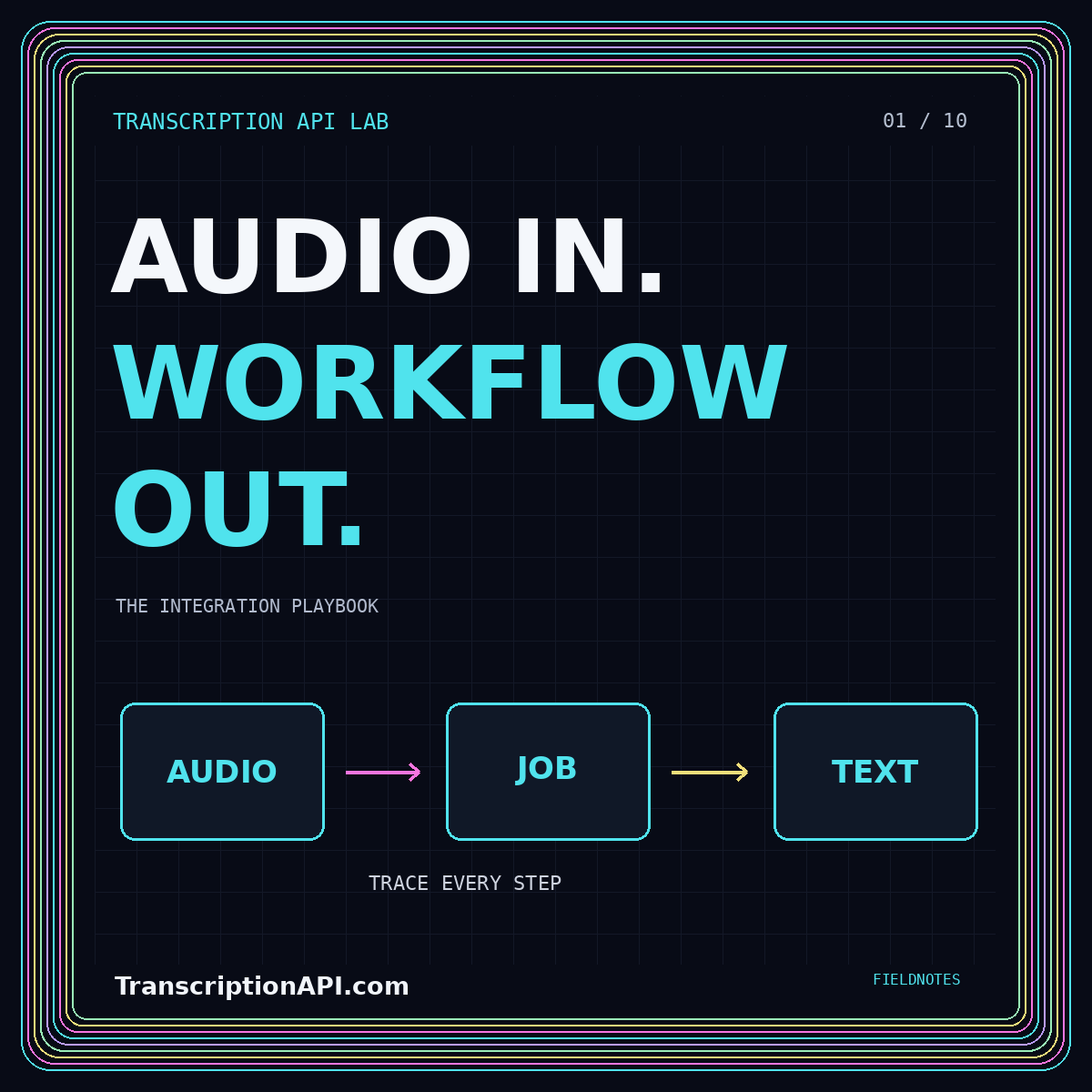
Design durable jobs, clear response contracts, bounded retries, and a review step that keeps every transcript traceable.
Read the field guide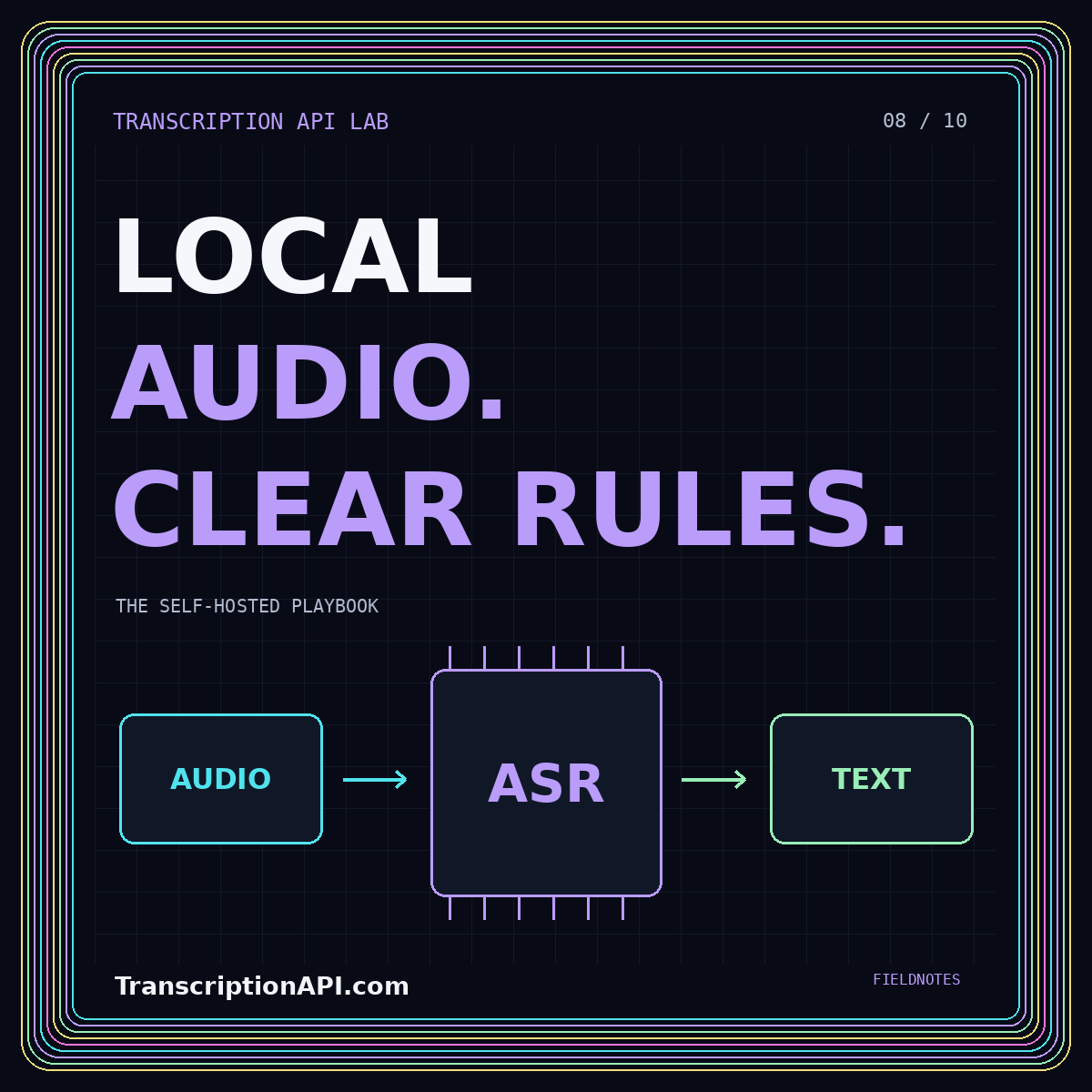
Separate local recognition from language processing, measure capacity, and map every storage and network boundary.
Read the field guideHave a correction, a topic suggestion, or a workflow worth exploring?