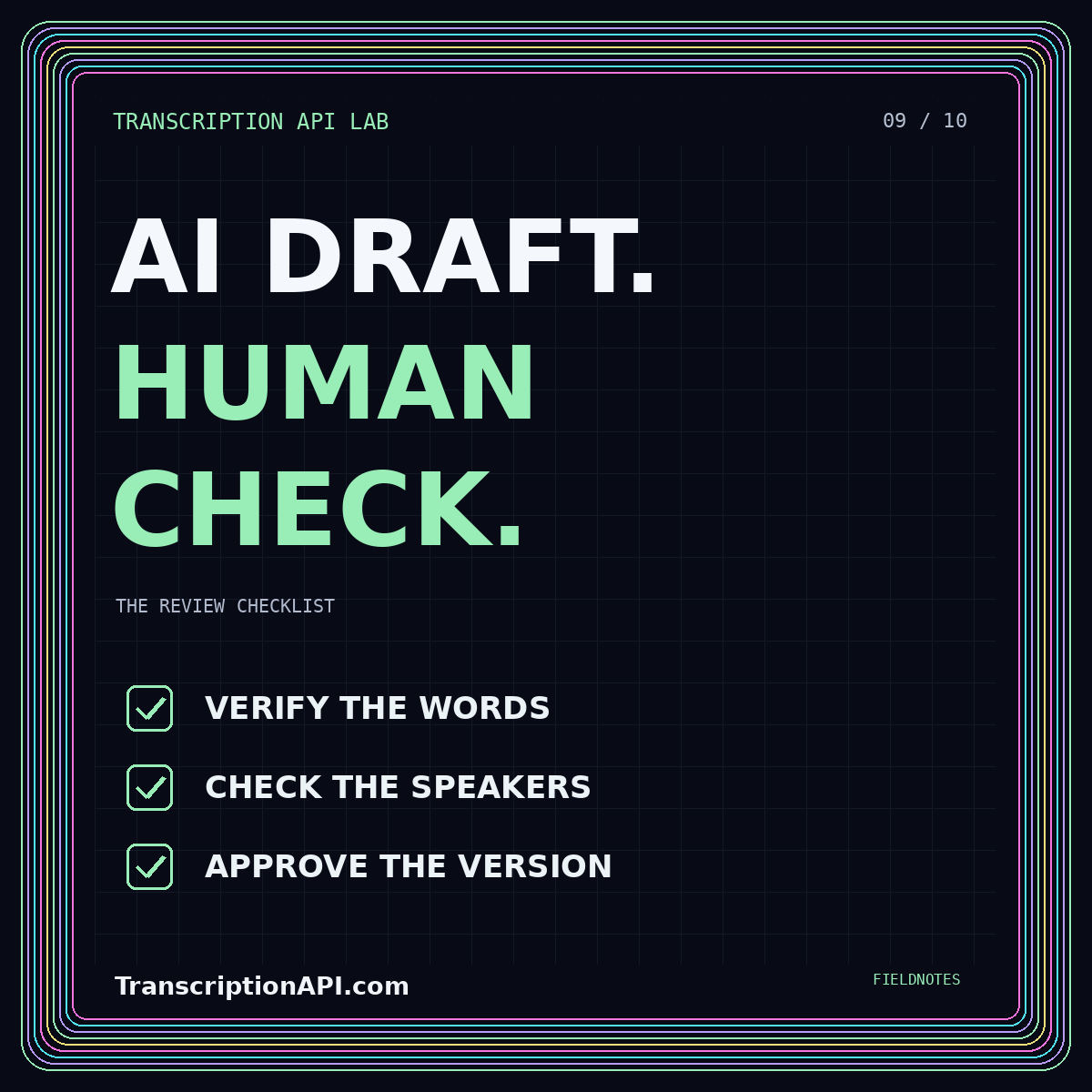
The AI transcriber review checklist: from machine draft to approval
Verify names, quantities, speaker assignments, uncertainty, and the final export before approving a transcript.
Read the field guideIDEAS, METHODS & PRACTICAL TRADEOFFS
Field notes for developers turning audio into something useful. Ten in-depth guides on integration, evaluation, publishing, and the workflows in between.
10 ORIGINAL FIELD GUIDES / NEWEST PUBLICATION DATE FIRST
Verify names, quantities, speaker assignments, uncertainty, and the final export before approving a transcript.
Read the field guide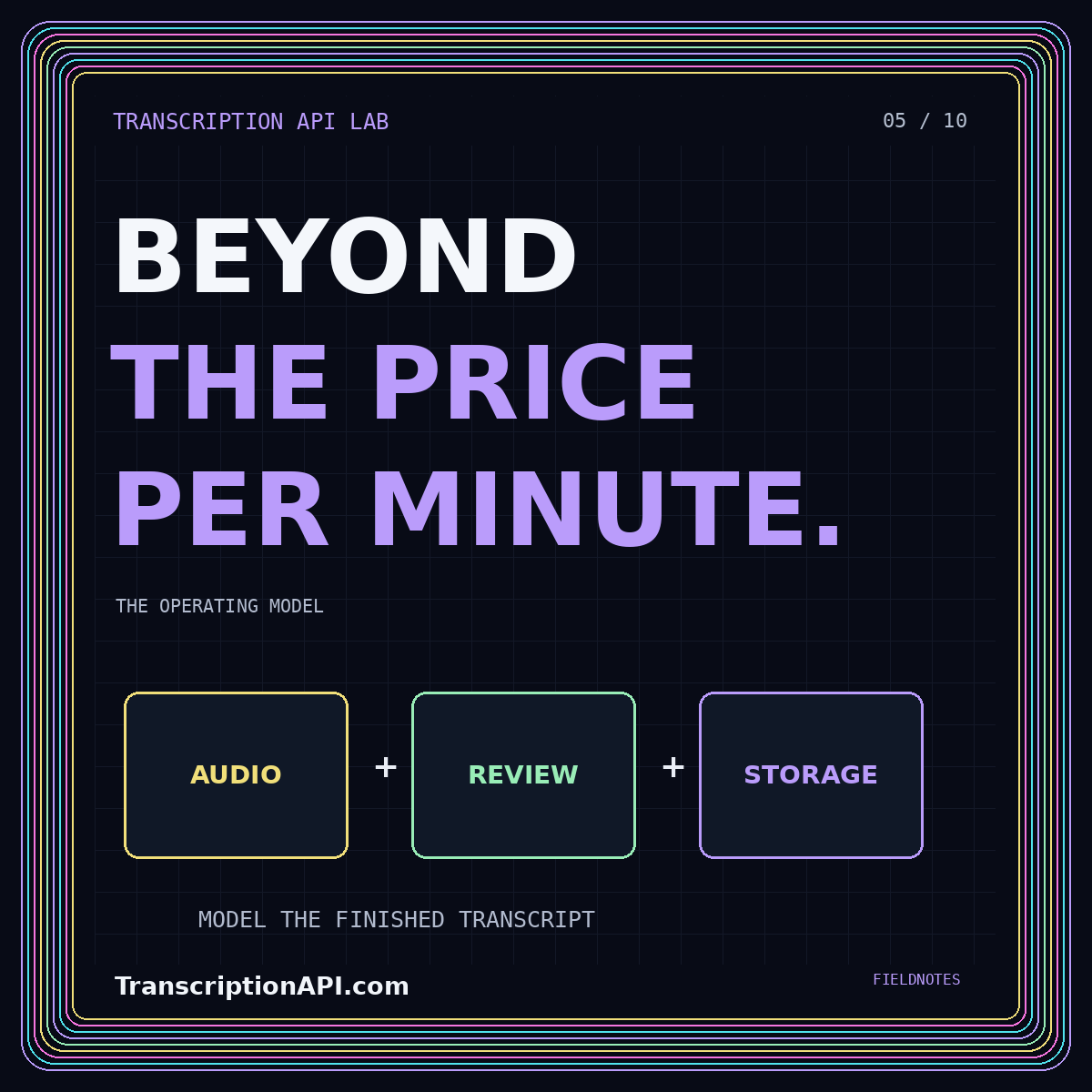
Use a transparent hypothetical model to compare recognition, retries, storage, and the time spent reviewing results.
Read the field guide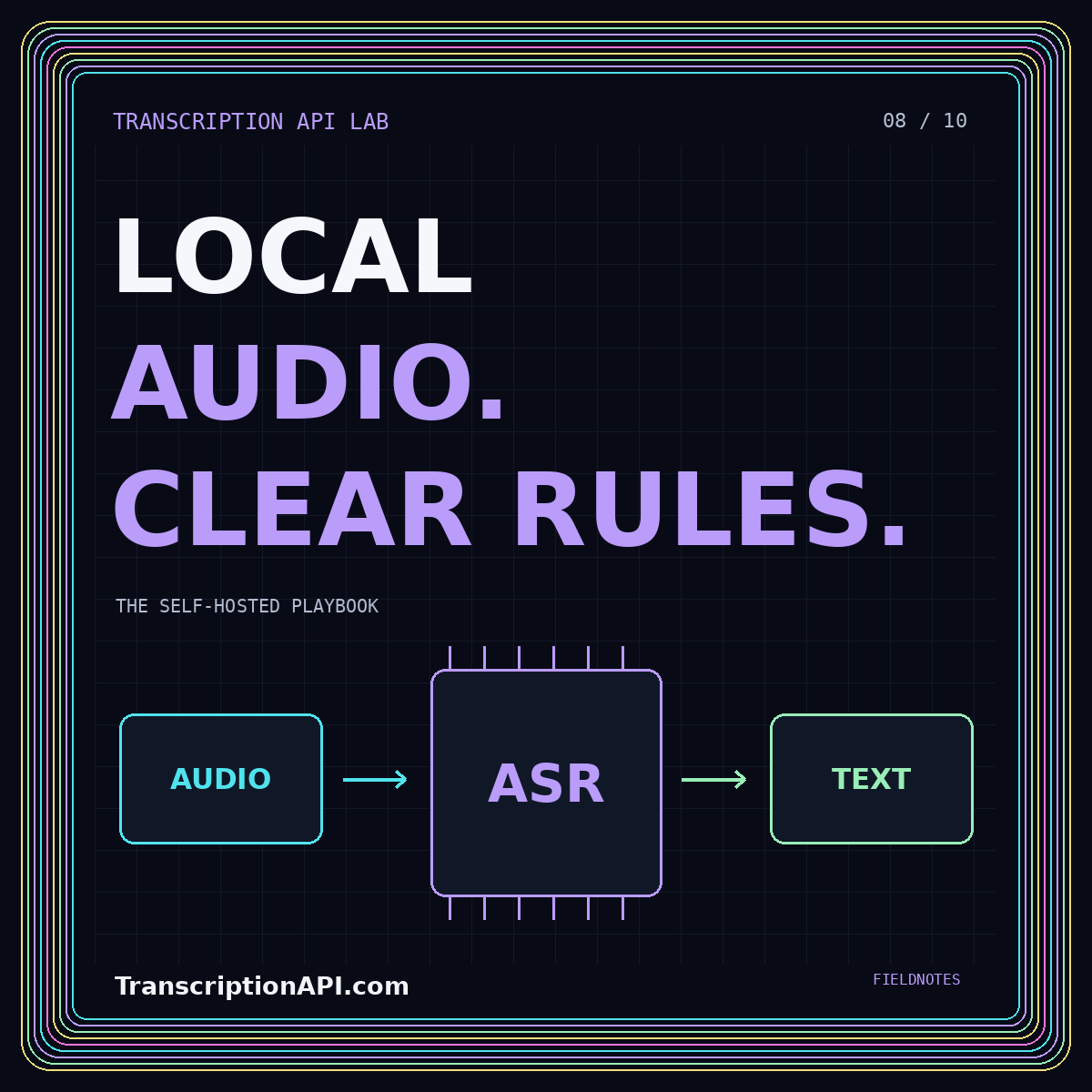
Separate local recognition from language processing, measure capacity, and map every storage and network boundary.
Read the field guide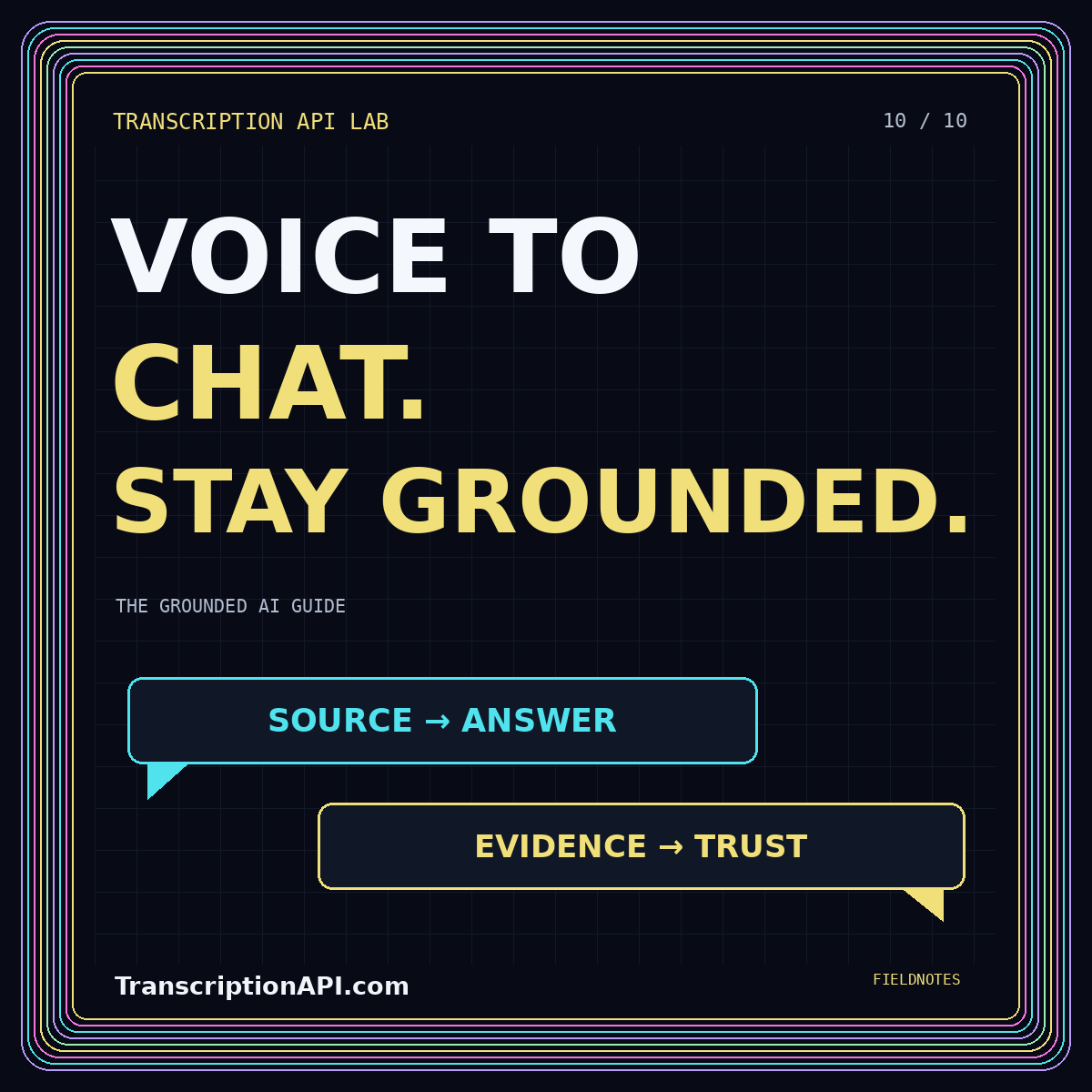
Design source-linked answers, permission-aware retrieval, and an explicit boundary between speech and action.
Read the field guide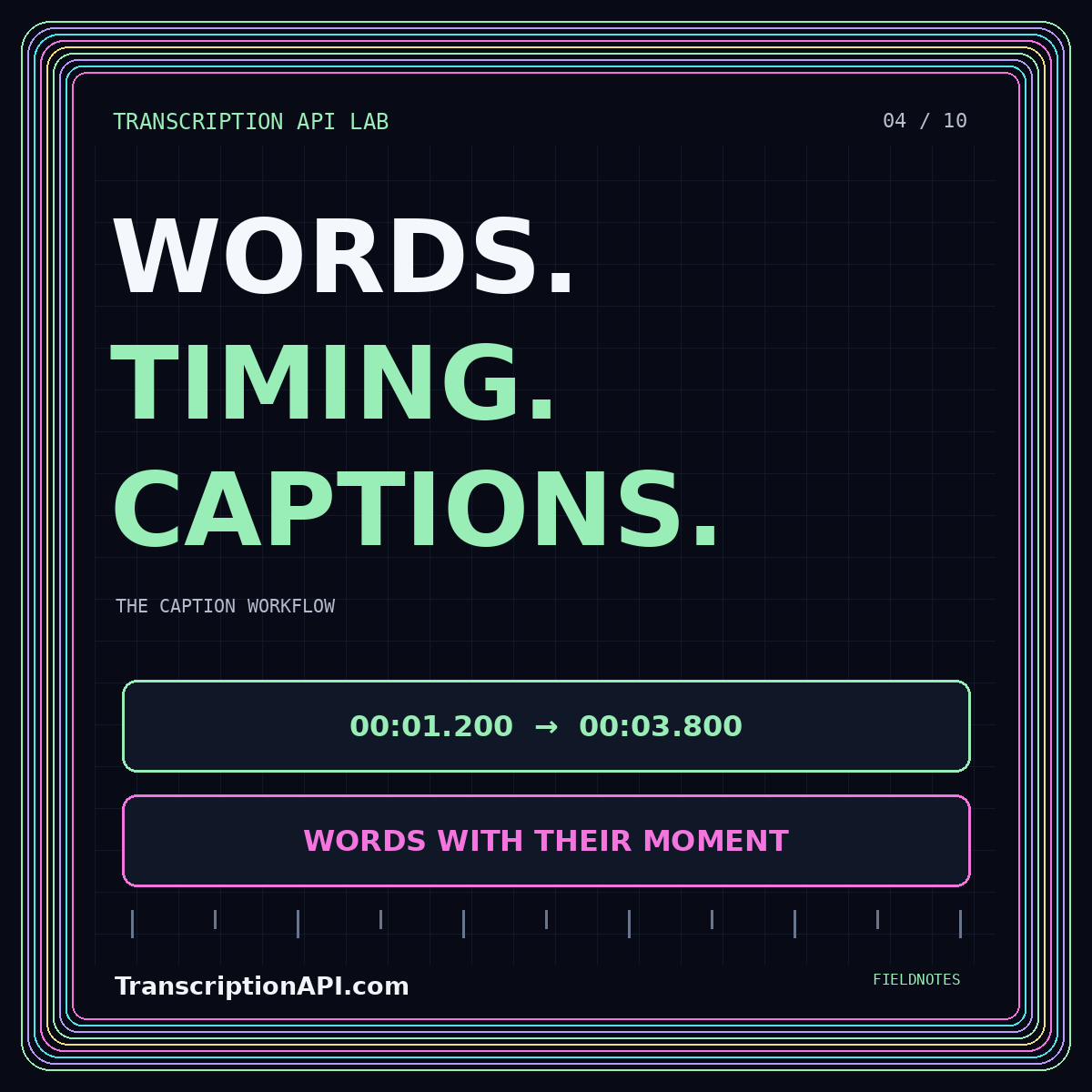
Build a caption-export pipeline with stable segments, timestamp validation, playback review, and media version checks.
Read the field guide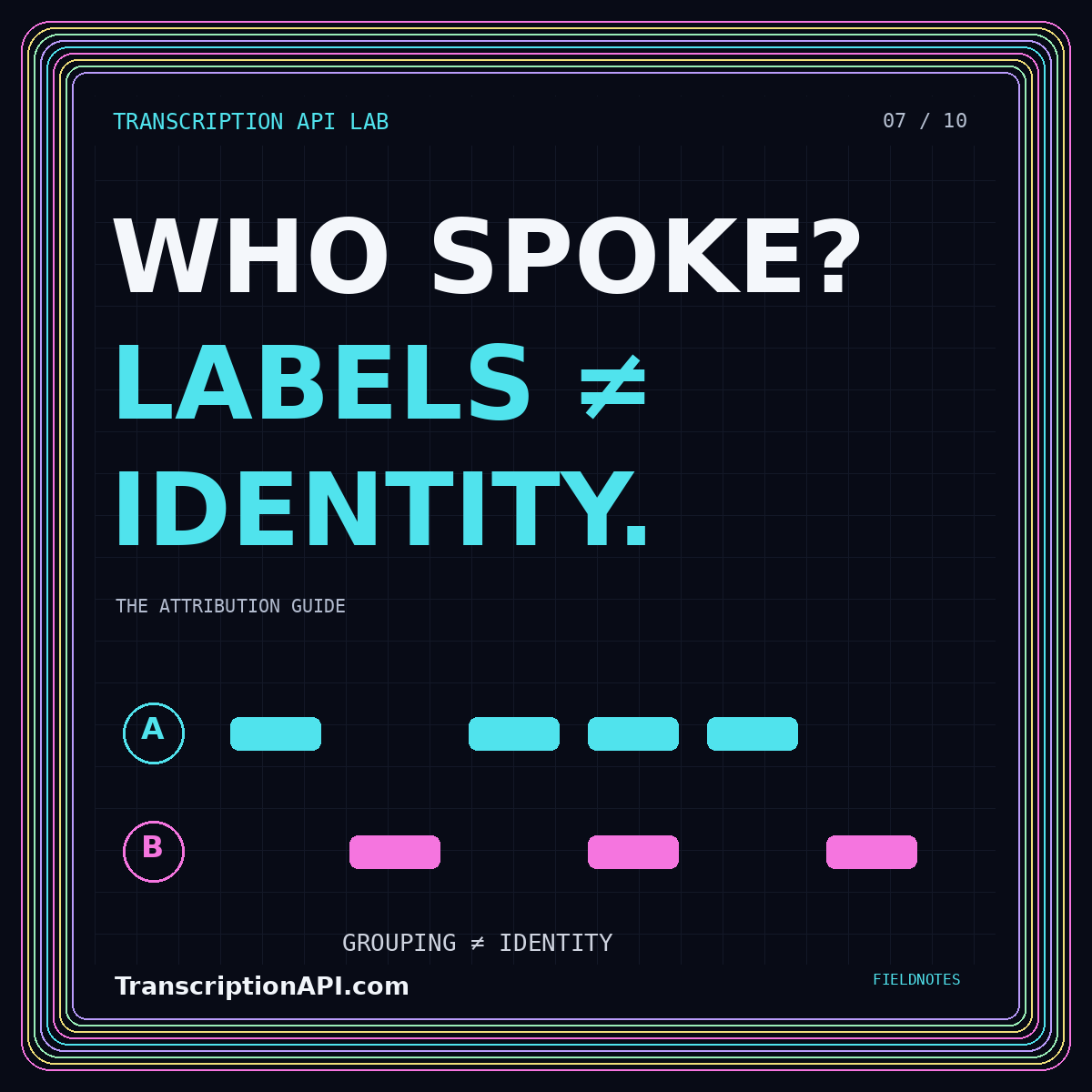
Keep recognized words, audio channels, anonymous speaker groups, and confirmed participant names separate.
Read the field guide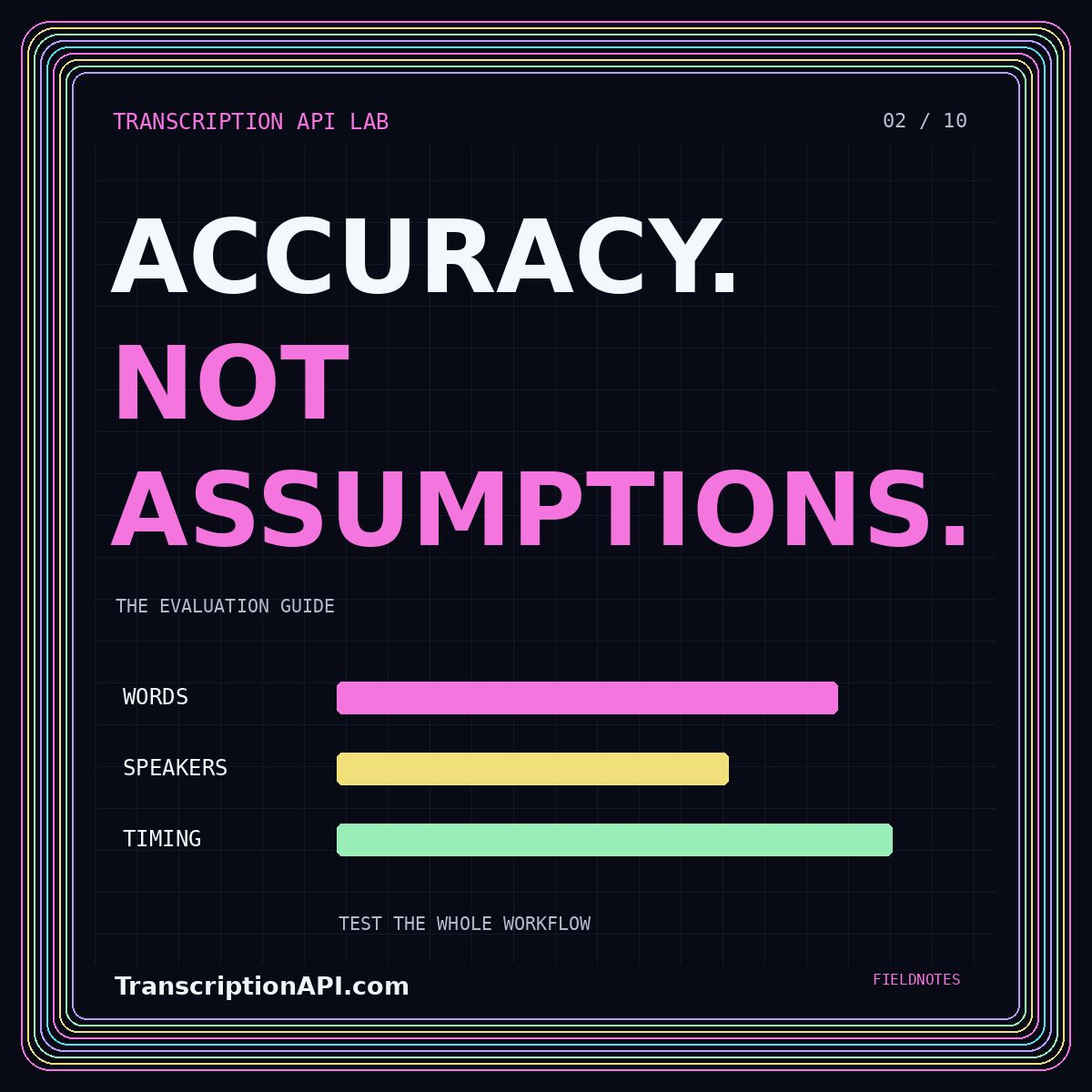
Build a representative test collection and measure the mistakes that matter beyond a headline accuracy score.
Read the field guide
Untangle transcription, translation, summarization, and speech synthesis—and prepare a readable, faithful record.
Read the field guide
Inspect codecs, channels, clipping, and conversions before changing the recognizer. Keep every processing step reversible.
Read the field guide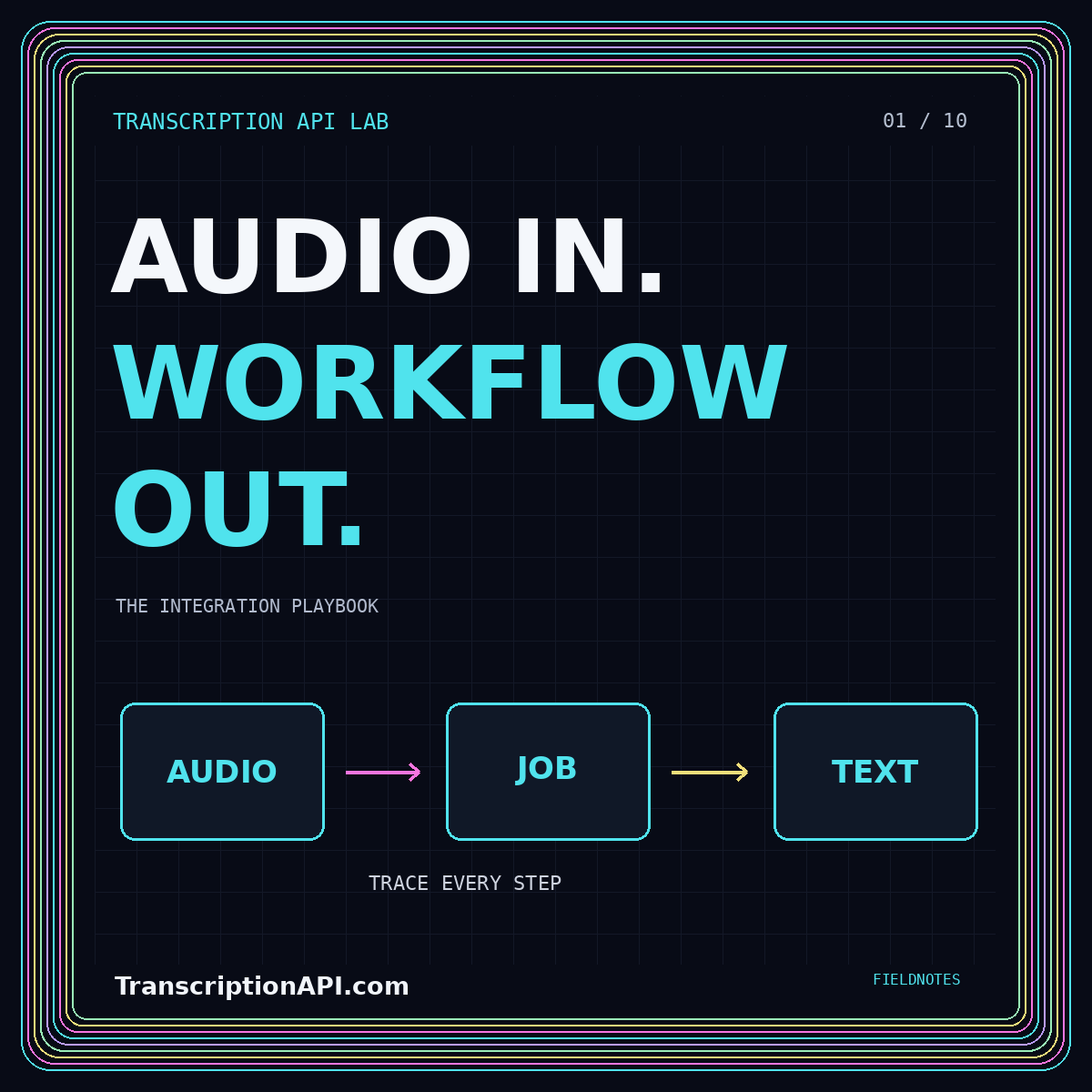
Design durable jobs, clear response contracts, bounded retries, and a review step that keeps every transcript traceable.
Read the field guideFIND A READING PATH
Design the parts around recognition: input validation, durable jobs, cost assumptions, and operational recovery. These guides focus on how an application behaves when real recordings and imperfect networks replace a controlled demonstration.
Explore this pathUseful transcripts must be faithful to the recording and appropriate for their destination. Explore evaluation, speaker attribution, readable text, caption exports, and the editorial decisions that keep uncertainty visible.
Explore this pathConnect speech recognition to local runtimes and transcript-based chat without losing the source record. These guides separate where processing happens from how access, interpretation, and approval are controlled.
Explore this pathHave a correction, a topic suggestion, or a workflow worth exploring?