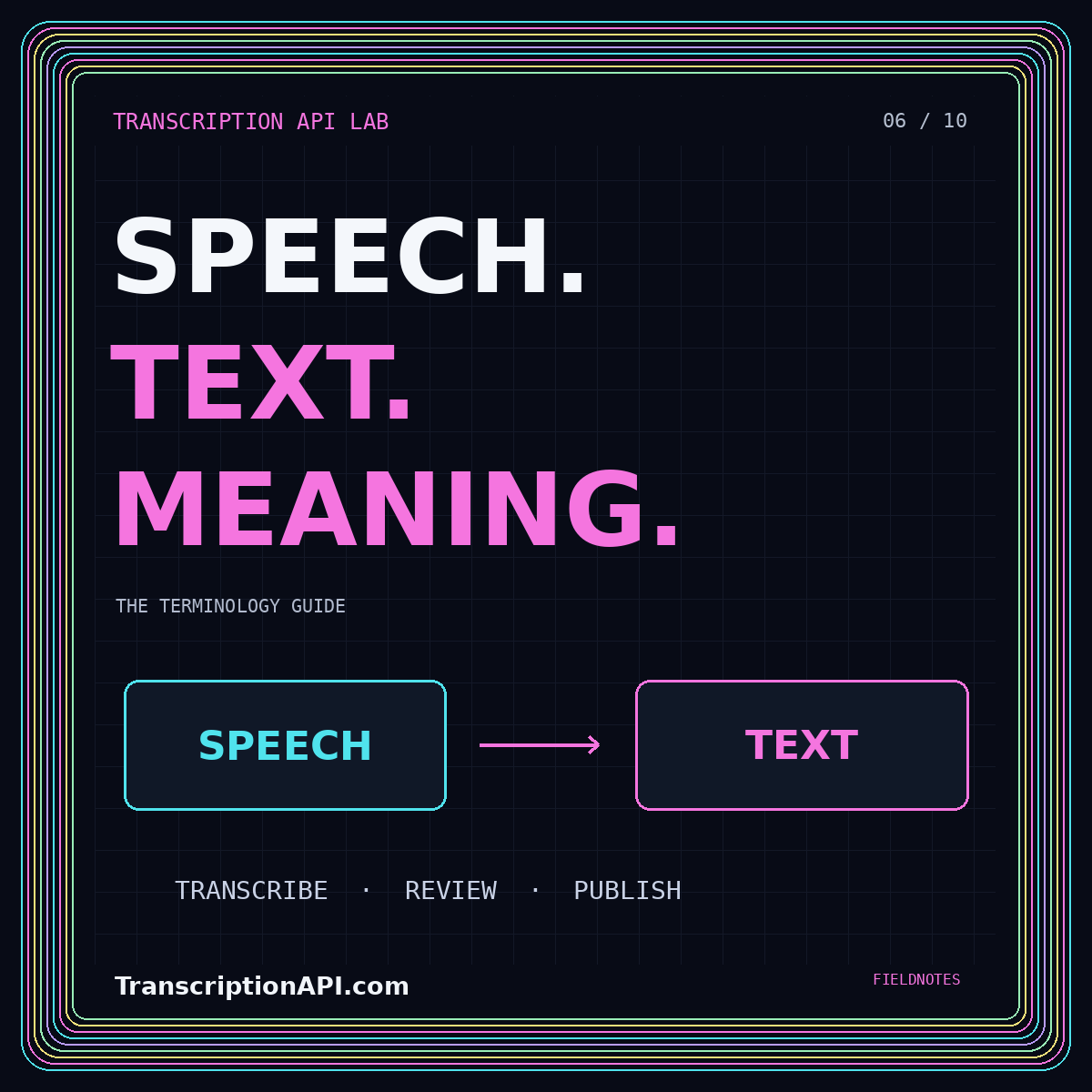
“Text to words transcription API” mixes several ideas that belong to different stages of a media workflow. A recording can become written text through speech recognition. Existing text can be formatted, summarized, or translated. Written text can also become spoken audio through speech synthesis. Defining which direction the information needs to travel is the first useful step toward choosing an integration.
This article treats the phrase as a request to turn spoken material into a readable transcript and then prepare that transcript for use. It does not describe a separate technical standard called text-to-words transcription. The Text to Words Transcription API guide provides a compact decision path. Here, the focus is preserving meaning while moving from raw recognition output to published words.
Name the input and the output
Describe the input concretely: a voice note, an interview recording, a video, or an existing document. Then describe the output: a transcript, a translation, a summary, or generated speech. Avoid starting with a product label before you have identified those two ends. A team asking for “voice recognition” may actually need captions rather than identity verification or a voice-command interface.
Write the transformation as a sentence. For example, “Convert a recorded interview into a reviewed English transcript with speaker labels.” That sentence makes several requirements visible: the audio already exists, the output preserves the spoken language, people will review it, and speaker attribution matters. A different sentence may reveal that no transcription step is required because the input is already text.
Separate a transcript from a summary
A transcript attempts to represent the recording in written form. A summary selects and compresses information for a purpose. Neither should silently impersonate the other. If a user asks what was said, returning an edited interpretation without labeling it changes the task. Keep the source transcript available even when a shorter summary is the main interface people use.
Store summaries as derived records with a link to the transcript version used to create them. When a transcript changes, mark the summary for review or regeneration. This avoids a familiar inconsistency: a corrected name in the transcript remains wrong in the summary. The chat transcription workflow extends this versioning approach to question answering and proposed action items.
Decide on an editorial style
Choose whether the transcript preserves fillers, repeated words, and false starts, or applies a clearly defined light-editing policy. Neither choice should be hidden from the people using the record. A research transcript and a public reading transcript may reasonably use different conventions. The important point is to document the style and apply it consistently throughout the material.
Do not rewrite uncertain speech into a confident statement simply to improve readability. Mark an unclear passage and keep a reference to the recording. When an editor adds context, distinguish that addition from the speaker's words. Your data model can preserve machine output, reviewed verbatim text, and a lightly edited reading version without forcing all three purposes into a single field.
Understand the accessibility deliverable
The W3C guidance on transcripts distinguishes basic transcripts, which include speech and relevant non-speech audio information, from descriptive transcripts that also convey necessary visual information. It also discusses practical presentation choices such as headings and useful timestamps. These distinctions help identify what a transcript needs to communicate; a speech-recognition result alone may not supply every required element.
For your project, inspect what information a person would miss without hearing or seeing the media. Assign a reviewer to add relevant descriptions where appropriate. Keep those descriptions separate from spoken quotations. Do not describe an automatically produced text file as a complete accessibility solution without checking the actual media, audience needs, presentation, and applicable requirements for the published experience.
Turn raw text into a readable document
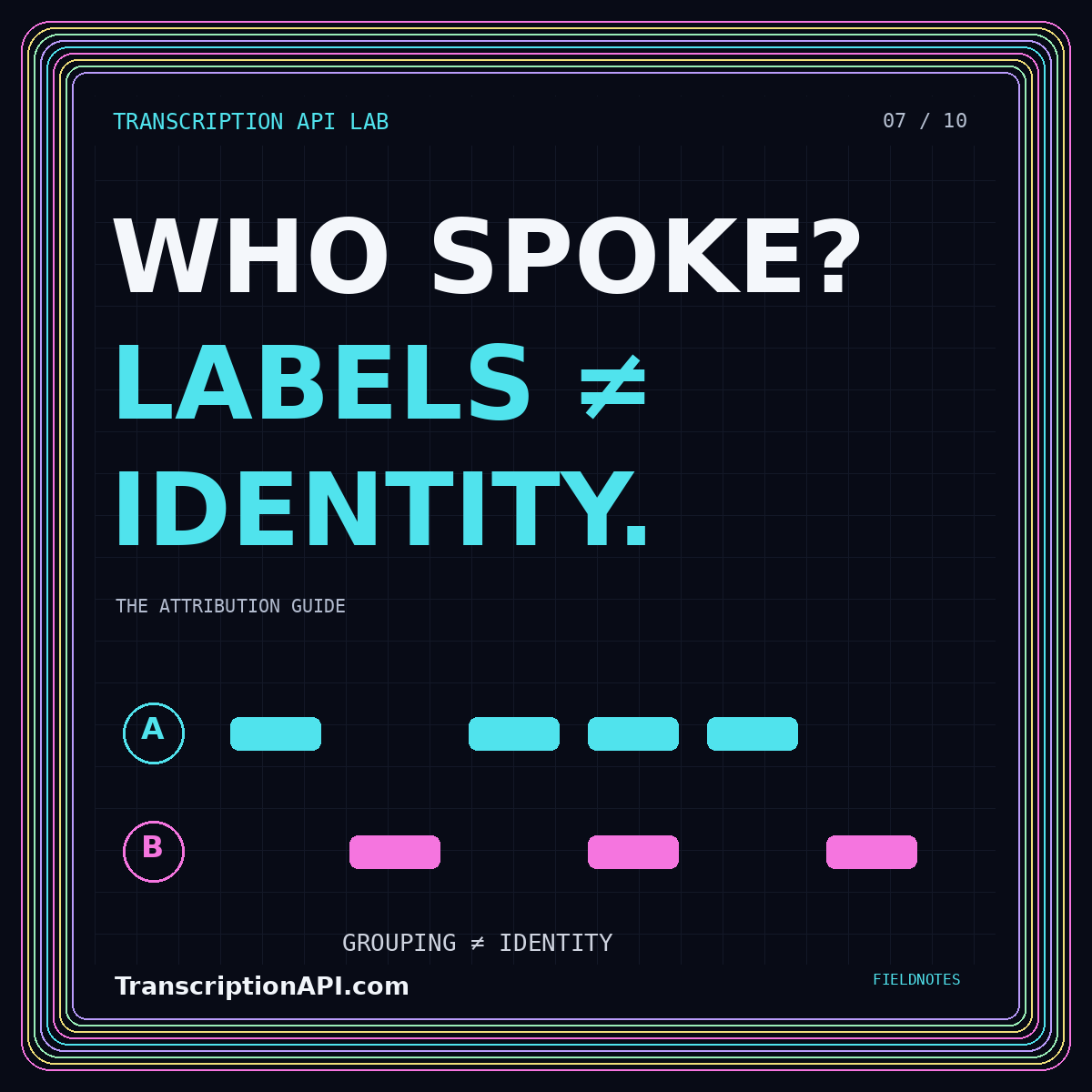
Start by grouping related speech into paragraphs rather than displaying a continuous wall of text. Preserve speaker changes where they help readers follow the conversation. Add section headings that describe the material without inventing a conclusion. A heading such as “Deployment questions” is usually more faithful than a heading that declares a decision the speakers never reached.
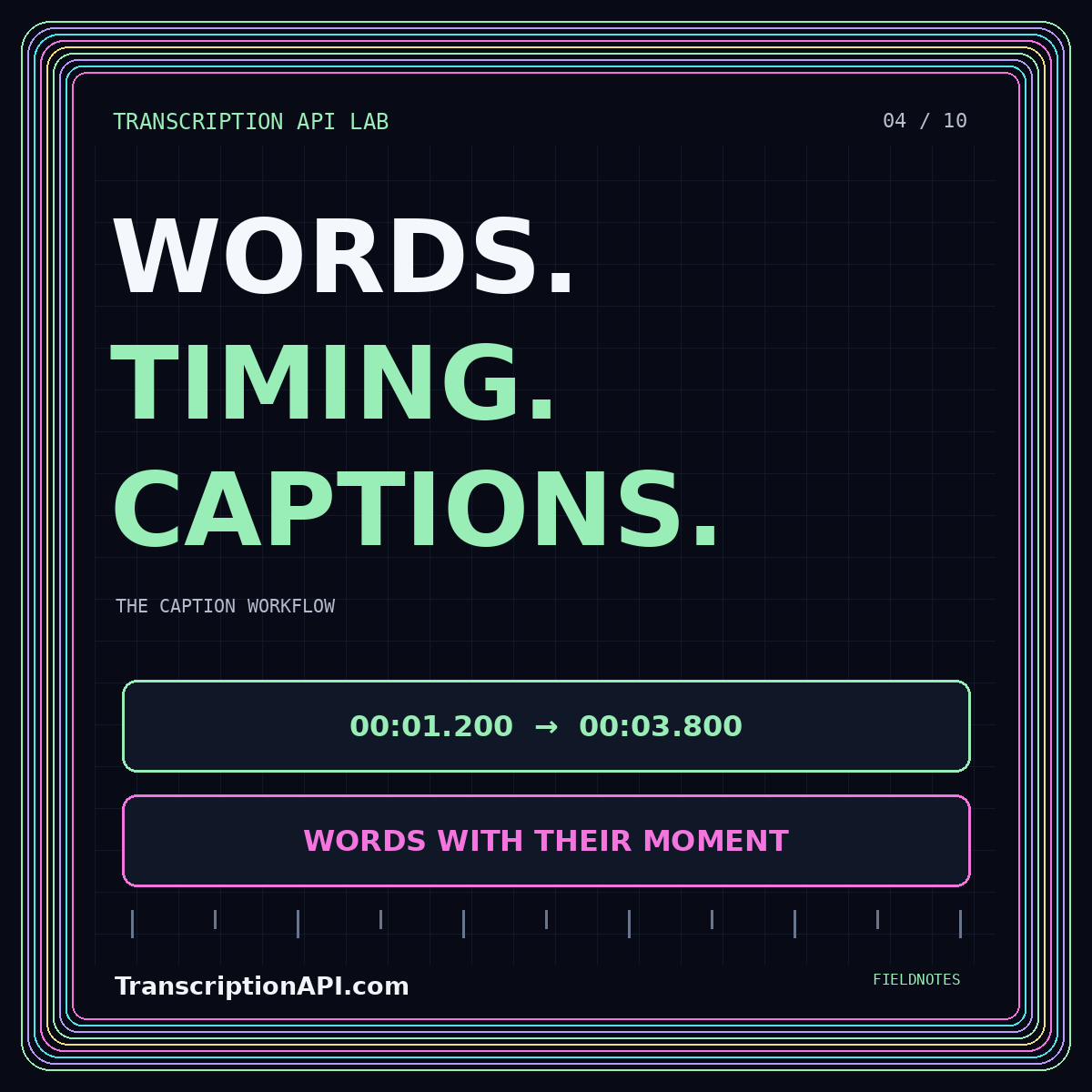
Use timestamps where they support navigation or verification. A long interview may benefit from periodic links back to the recording; a short announcement may not need timing beside every sentence. Base the decision on the reading task. Keep the underlying segment data available even when the public layout hides detailed timing, so that editors and downstream tools can still find the source passage.
Preserve important distinctions in wording
Pay particular attention to negation, uncertainty, quantities, and conditional language. “We might release it” is not the same as “We will release it.” A formatting pass should not remove that difference. Create review checks for the kinds of wording that matter to your material. These checks are especially useful when a fluent rewrite looks more polished than the actual spoken statement.
Treat names and specialized terms as items to verify, not opportunities to guess from general knowledge. A familiar spelling may still be wrong for this recording. Where another legitimate source confirms a term, record the correction transparently. When the evidence remains ambiguous, preserve the uncertainty rather than selecting the most plausible-looking word and presenting it as established fact.
Handle translation as a separate transformation
A translated transcript changes the language as well as the medium. Keep the original-language transcript and identify the language of each derived version. Record whether translation followed a reviewed transcript or an unreviewed recognition result. This makes it possible to diagnose whether an error began in speech recognition, source editing, or the translation stage.
Use qualified review when the consequences of a translation error are significant. Do not assume that a fluent target-language paragraph preserves every qualification in the original. Design the interface so that reviewers can inspect the source segment and the translation together. A version relationship is more useful than two unrelated documents that happen to share the same recording title.
Choose exports for their destination
Plain text is convenient for basic reuse, while HTML supports headings and accessible links in a browser. A structured JSON export can preserve segments and metadata for another application. Timed caption formats serve a different purpose from a reading transcript. Select formats according to the consuming system, not merely because an API offers a long list of export options.
Define how each export handles speaker labels, uncertainty markers, and editorial additions. Test non-English characters and long recordings. Keep the document title, language, and version consistent across outputs. For synchronized media, follow the caption-export guide, which treats timing validation and playback review as explicit steps rather than assuming a transcript is already a finished caption track.
Make publication easy to verify
Give readers a clear title and a visible relationship to the source media. Put the transcript where people can find it from the recording page. Avoid hiding the only text version behind an unexplained control or a file format the audience cannot conveniently use. Check the result on a small screen and with keyboard navigation as well as on a desktop.
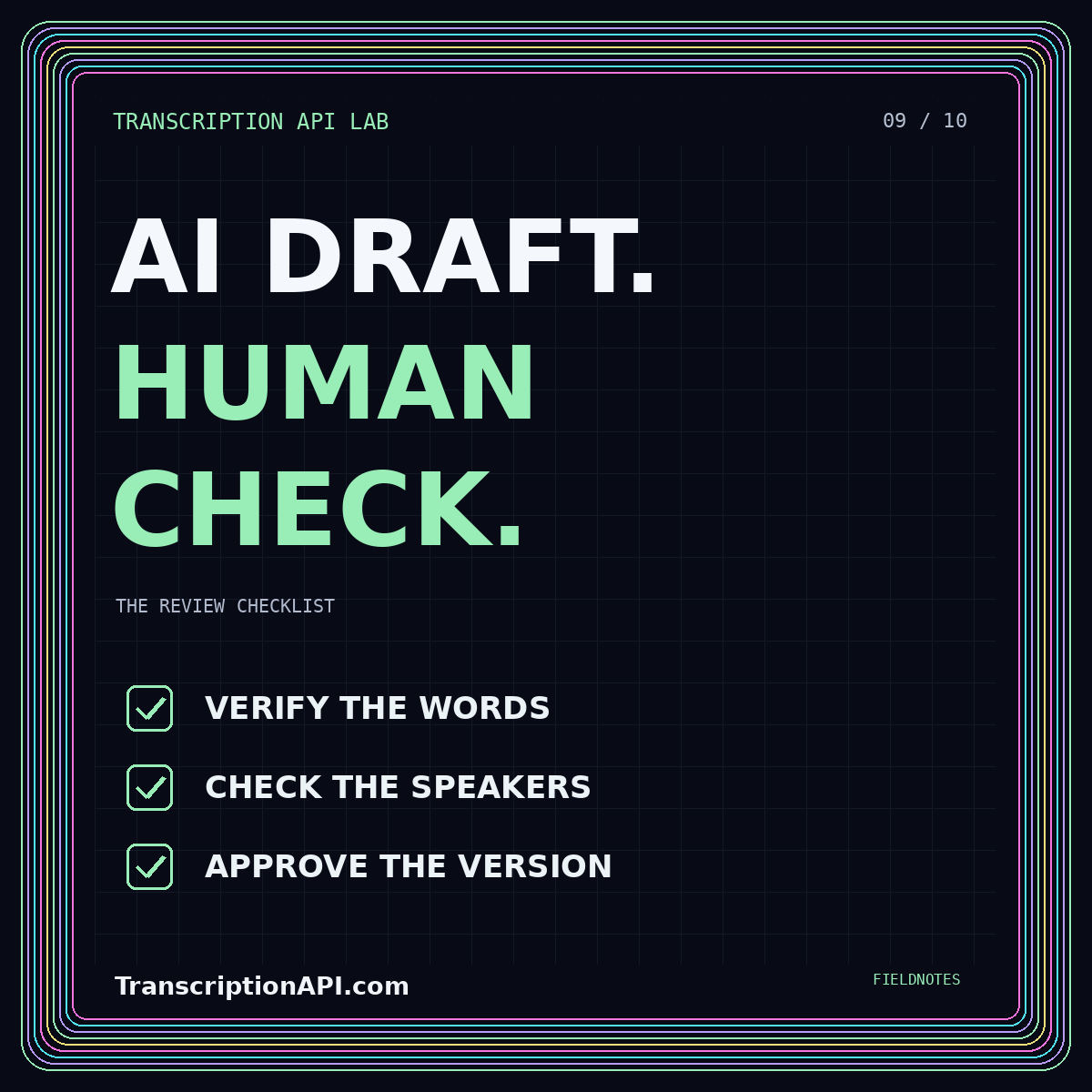
Keep the editorial workflow traceable. Record who approved a version according to your team's process, what source media it corresponds to, and whether any passages remain unresolved. When a correction is published, update related exports consistently. A readable document should not come at the expense of knowing which words are supported by the recording and which were added for context.
Conclusion: clarify the transformation first
The useful question behind text-to-words transcription is what information should move from one form to another without losing its meaning. Define the input, output, editorial style, and review process before choosing tools. Keep transcription, translation, summarization, and speech generation distinct. That clarity produces a more reliable integration and a written record that readers can understand, navigate, and verify.