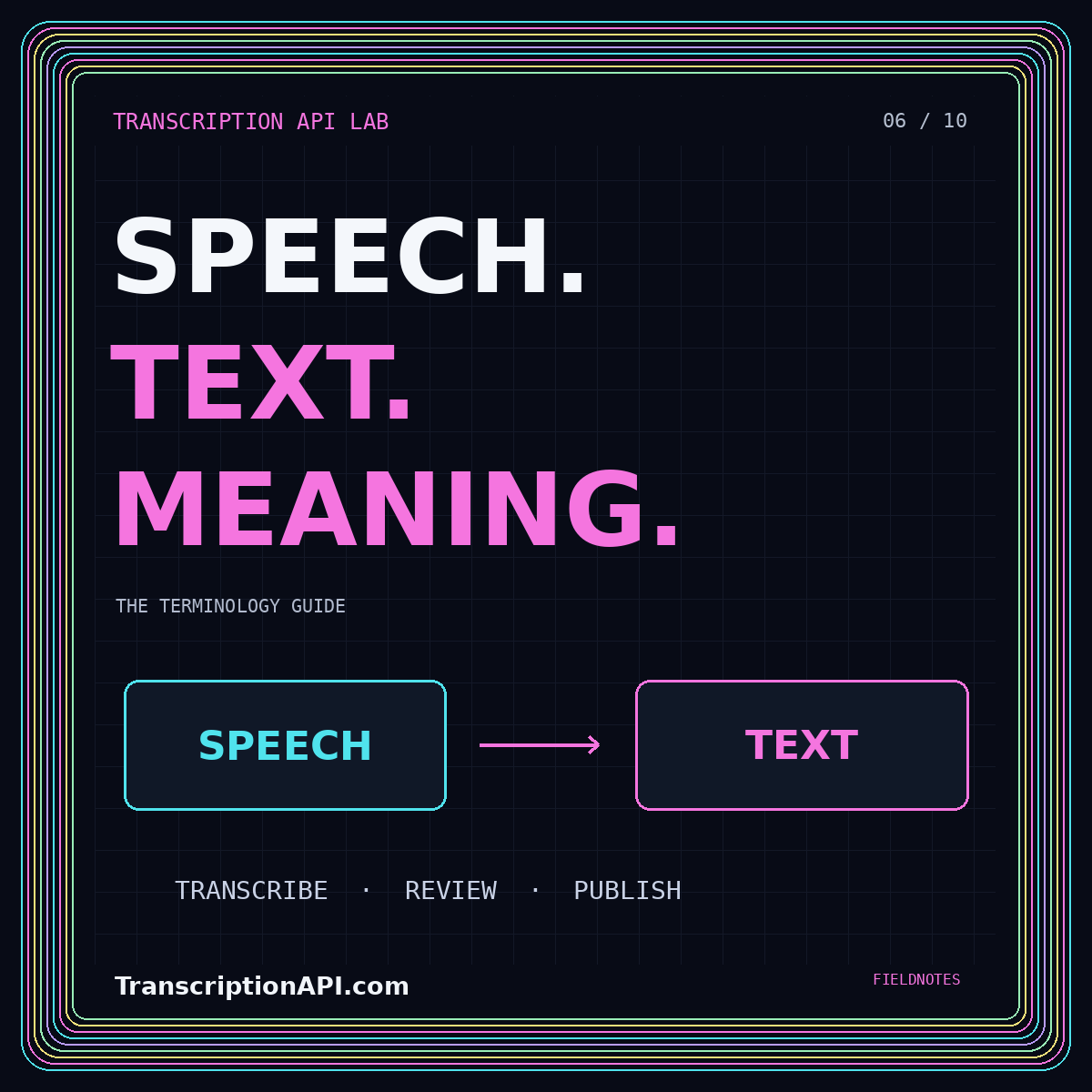
Text-to-words transcription explained: choose the right transformation
Untangle transcription, translation, summarization, and speech synthesis—and prepare a readable, faithful record.
Read the field guide06 / TERMINOLOGY & PUBLISHING
Make the meaning
clear from the start.
“Text to words transcription API” can describe several different needs. Here, it means turning spoken material into a readable text record. Identify the input and intended output first, then keep transcription, translation, summarization, and speech generation separate.
Read the complete field guideAudio-to-text recognition starts with a recording or live speech. Text-to-speech starts with written text and generates audio. Summarization and translation operate on content for different purposes. A filename sent to a text-only model is not the same as sending audio to a recognizer.
Write a concrete requirement such as “a reviewed interview transcript with speaker labels.” This makes the source, output, and review expectations visible without relying on an ambiguous product label.
Preserve a source transcript even when a summary is the main reading experience. Store derived text against the version used to create it. When a correction changes a name, number, or qualification, review related summaries rather than leaving inconsistent outputs in place.
Apply a documented style for fillers, repetitions, and uncertain speech. Do not turn a conditional statement into a commitment for the sake of cleaner prose. Clearly distinguish editorial context from the words supported by the recording.
W3C guidance distinguishes basic transcripts from descriptive transcripts that add relevant visual information. Decide which deliverable the media and audience need. Recognition alone may not provide all the information required for the published experience.
Use paragraphs, useful headings, and timestamps where they aid navigation. Keep source media discoverable. Test exports for character handling and consistent speaker labels, and preserve detailed segment data even when the public reading layout does not show every timing field.
Primary reference: W3C guidance on transcripts. Provider-specific details should be checked against the version and configuration you use.
MAKE THE CHOICE EXPLICIT
Recognize speech, verify the result, and retain source references.
Create a labeled interpretation tied to a specific transcript version.
Use a speech-generation workflow, not a transcription endpoint.
This site uses the phrase to clarify an ambiguous search intent, not to claim a separate technical standard. Define whether you need recognition, formatting, translation, summarization, or speech synthesis.
Use the editorial style appropriate to the task and make it explicit. Preserve meaning, uncertainty, and the distinction between a verbatim record and a lightly edited reading version.
KEEP EXPLORING
Untangle transcription, translation, summarization, and speech synthesis—and prepare a readable, faithful record.
Read the field guide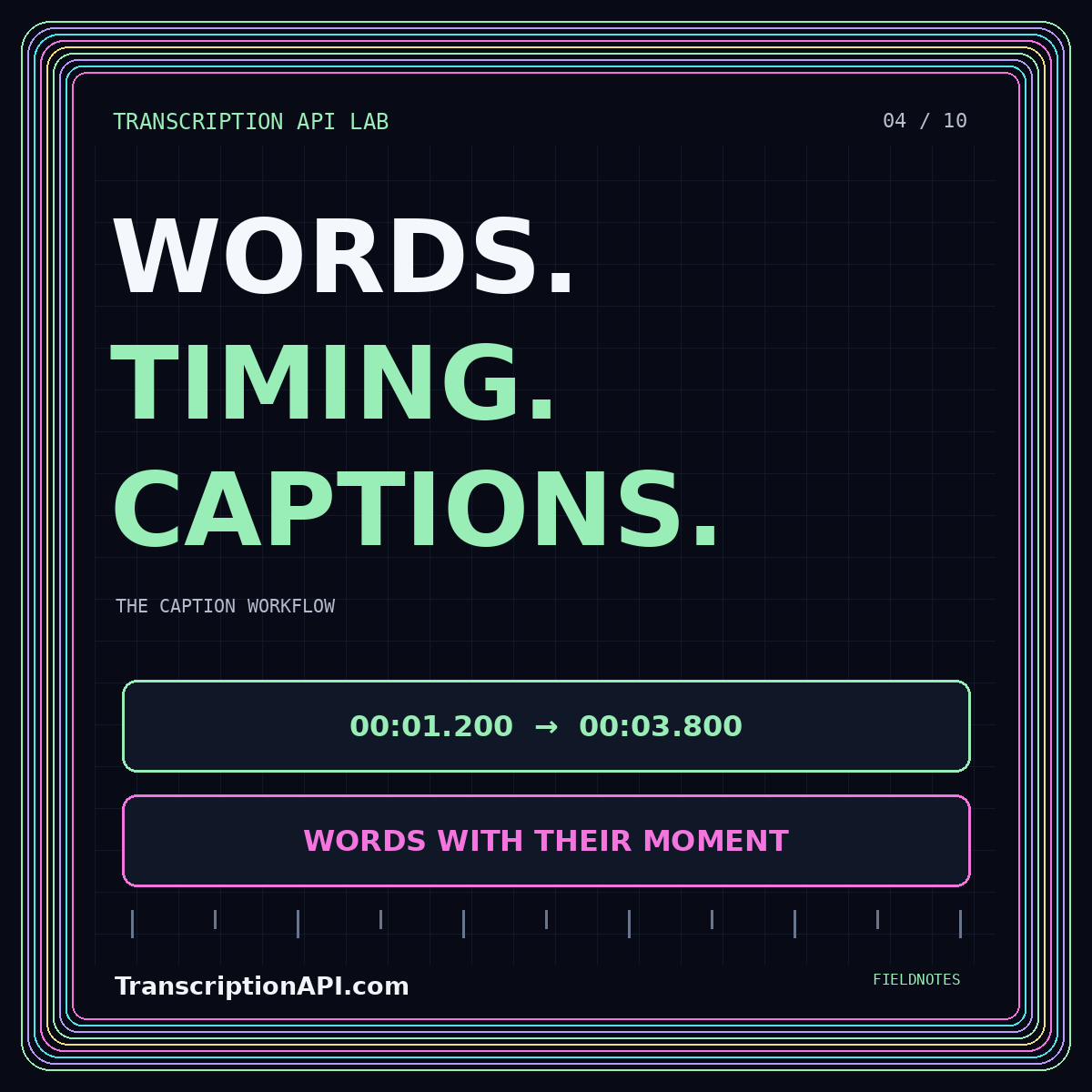
Build a caption-export pipeline with stable segments, timestamp validation, playback review, and media version checks.
Read the field guide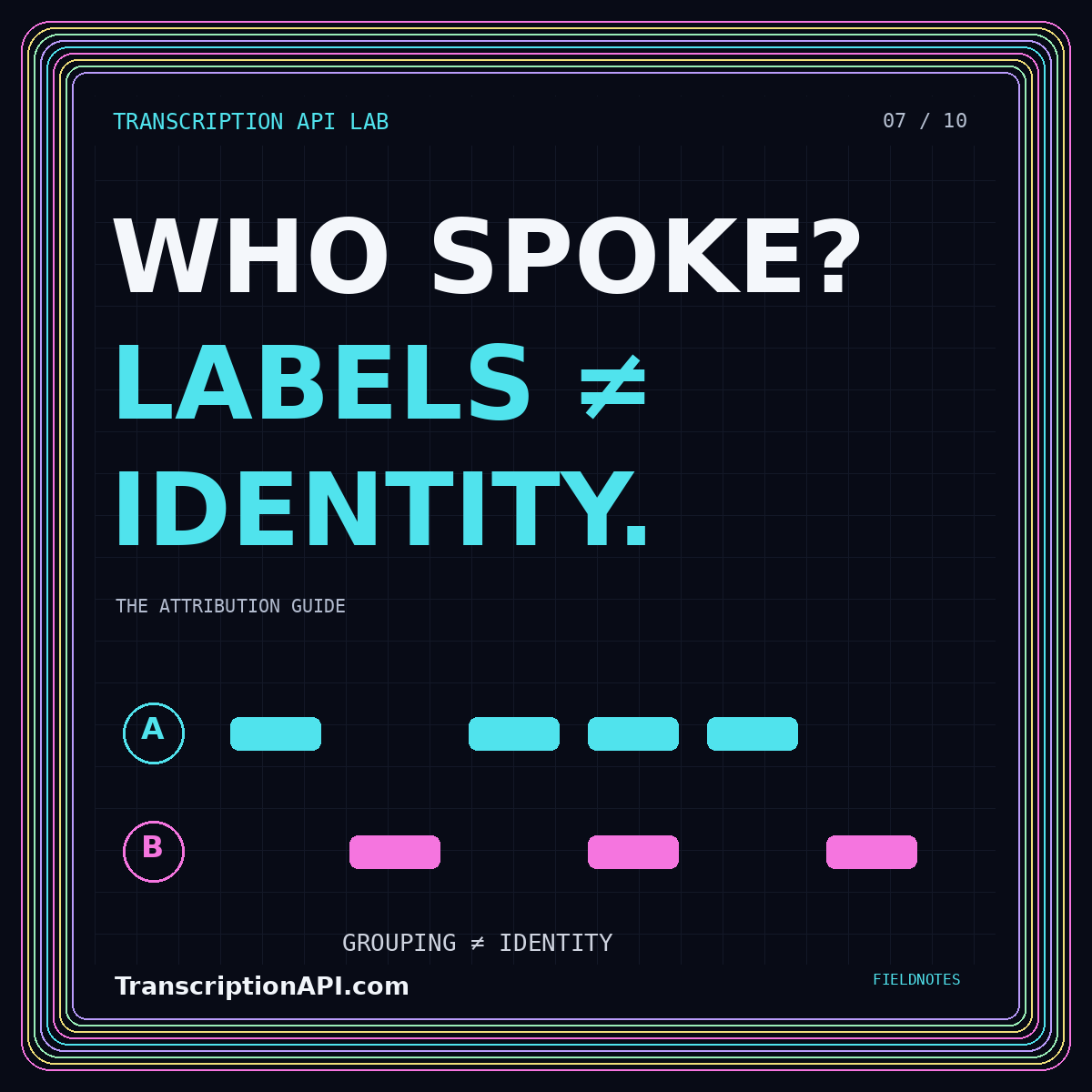
Keep recognized words, audio channels, anonymous speaker groups, and confirmed participant names separate.
Read the field guideHave a correction, a topic suggestion, or a workflow worth exploring?