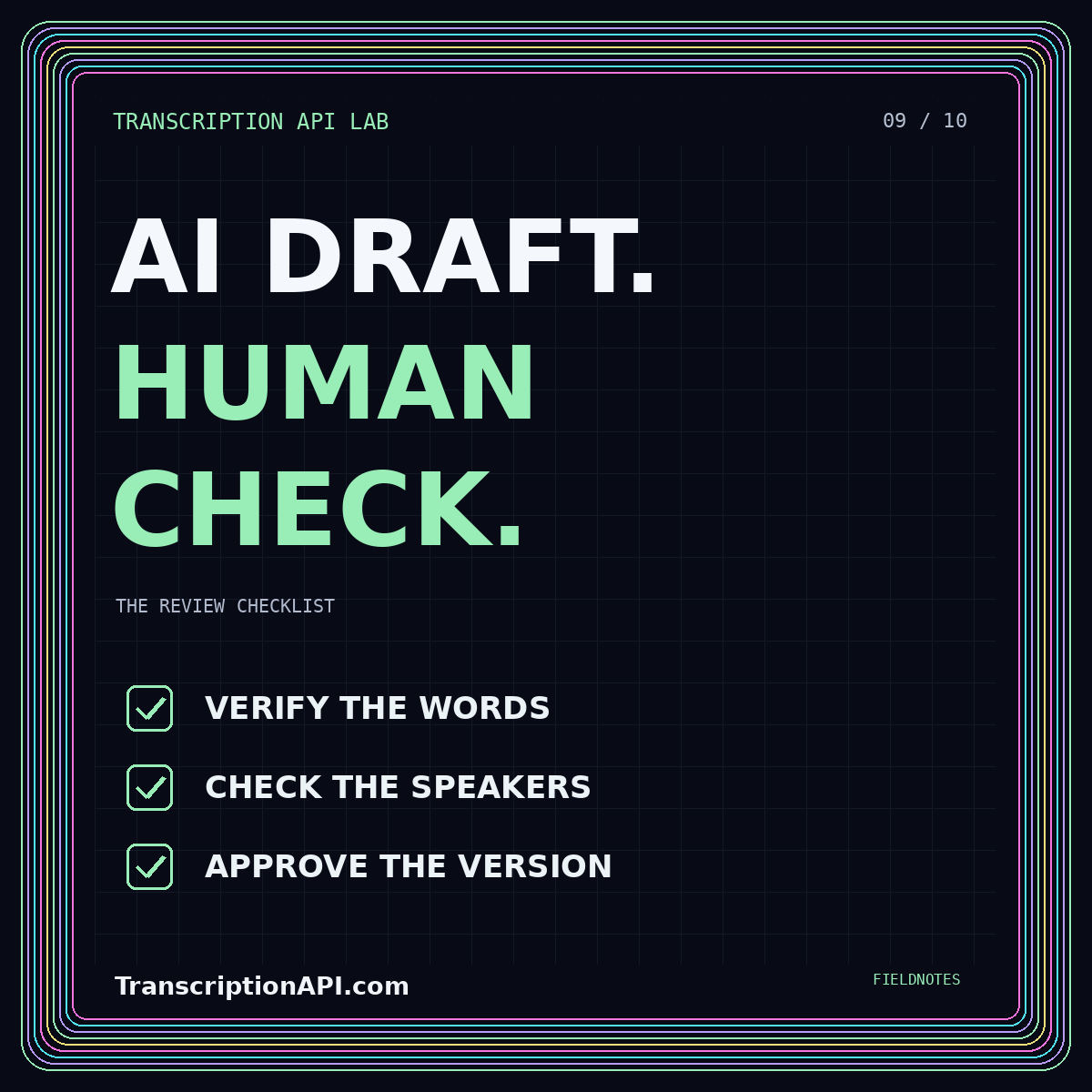
The AI transcriber review checklist: from machine draft to approval
Verify names, quantities, speaker assignments, uncertainty, and the final export before approving a transcript.
Read the field guideTRANSCRIPTION API LAB / CATEGORY
Useful transcripts must be faithful to the recording and appropriate for their destination. Explore evaluation, speaker attribution, readable text, caption exports, and the editorial decisions that keep uncertainty visible.
Use the accuracy guide to evaluate a configuration across recordings, then use the review checklist to approve a particular transcript. The caption and terminology guides help distinguish a valid text file from a usable media experience. Keep format validation separate from source checking and accessibility review.
05 FIELD GUIDES / QUALITY & ACCESSIBILITY
Verify names, quantities, speaker assignments, uncertainty, and the final export before approving a transcript.
Read the field guide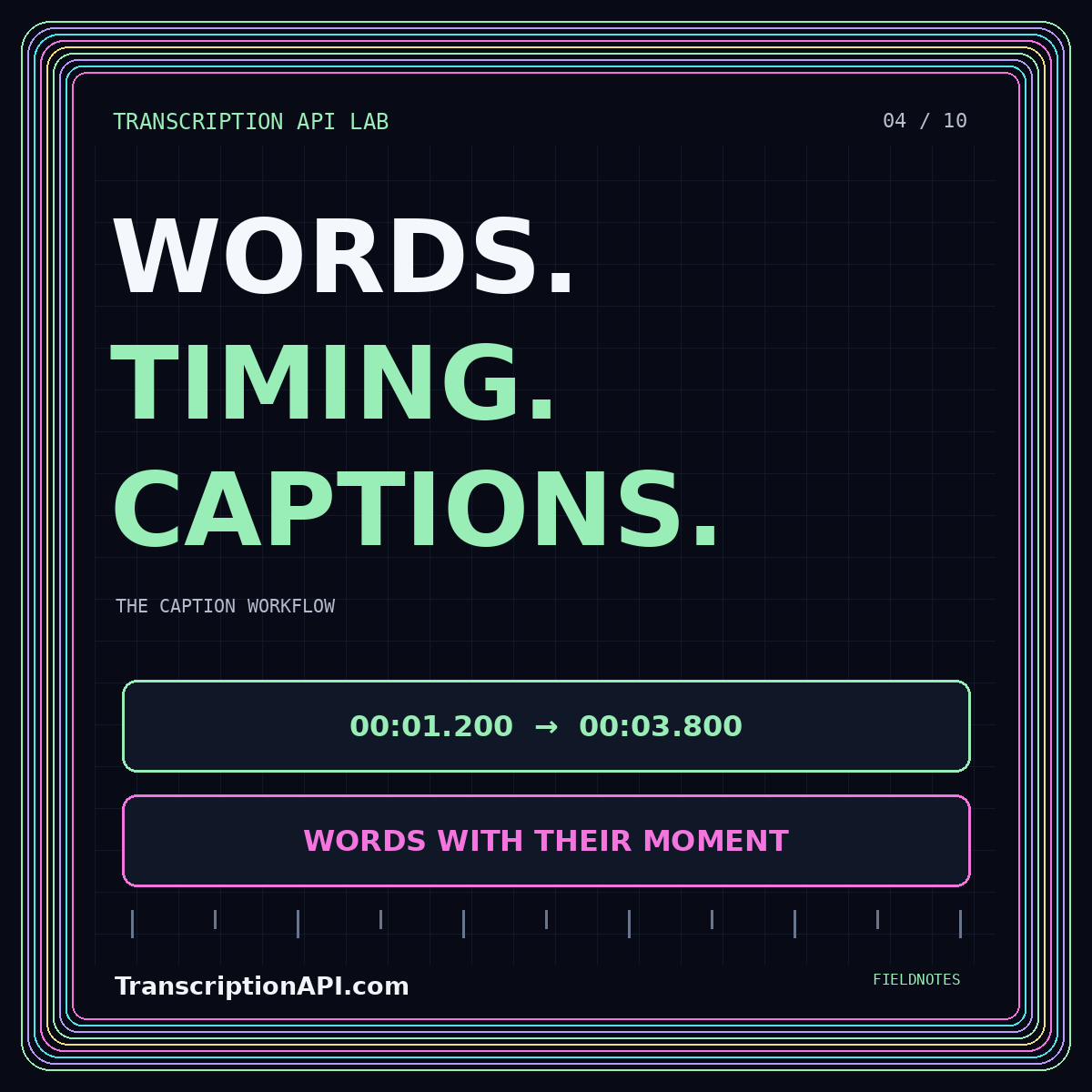
Build a caption-export pipeline with stable segments, timestamp validation, playback review, and media version checks.
Read the field guide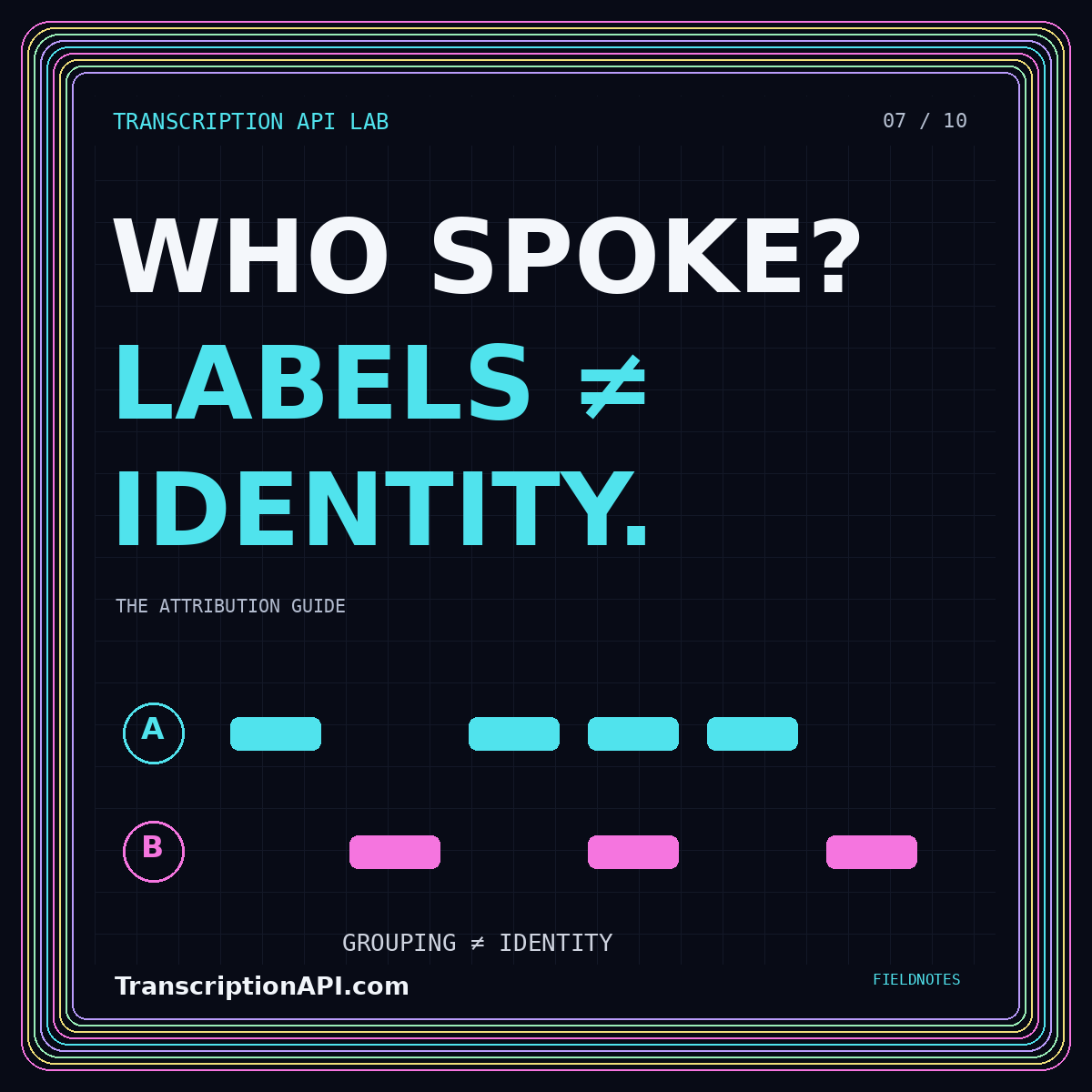
Keep recognized words, audio channels, anonymous speaker groups, and confirmed participant names separate.
Read the field guide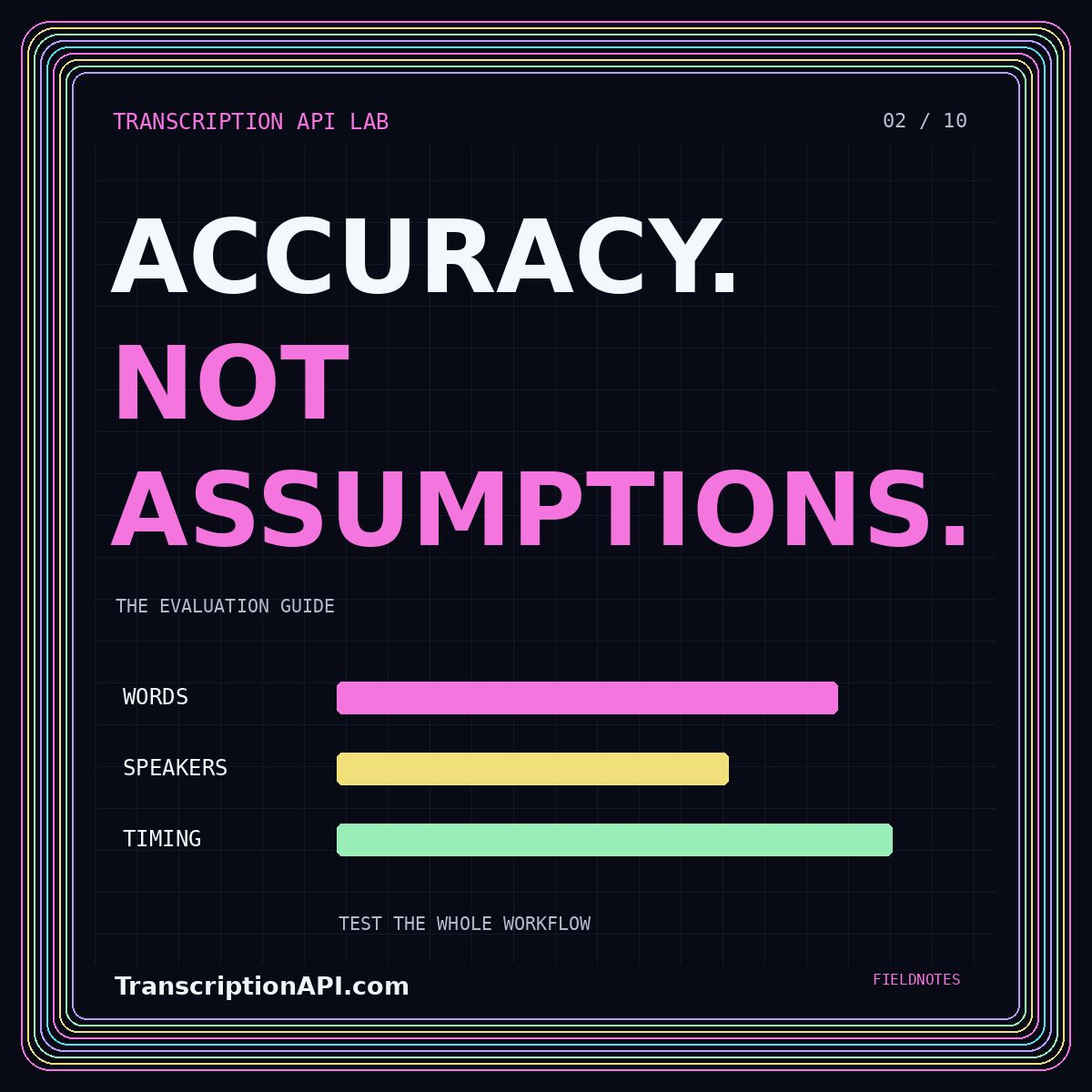
Build a representative test collection and measure the mistakes that matter beyond a headline accuracy score.
Read the field guide
Untangle transcription, translation, summarization, and speech synthesis—and prepare a readable, faithful record.
Read the field guideCONNECT THE IDEAS
Create an accountable path from machine draft to a transcript approved for a defined use.
Read the overviewTurn recognized speech into useful, correctly timed outputs for the actual destination.
Read the overviewDesign correctable speaker attribution without conflating voices, channels, and people.
Read the overviewHave a correction, a topic suggestion, or a workflow worth exploring?