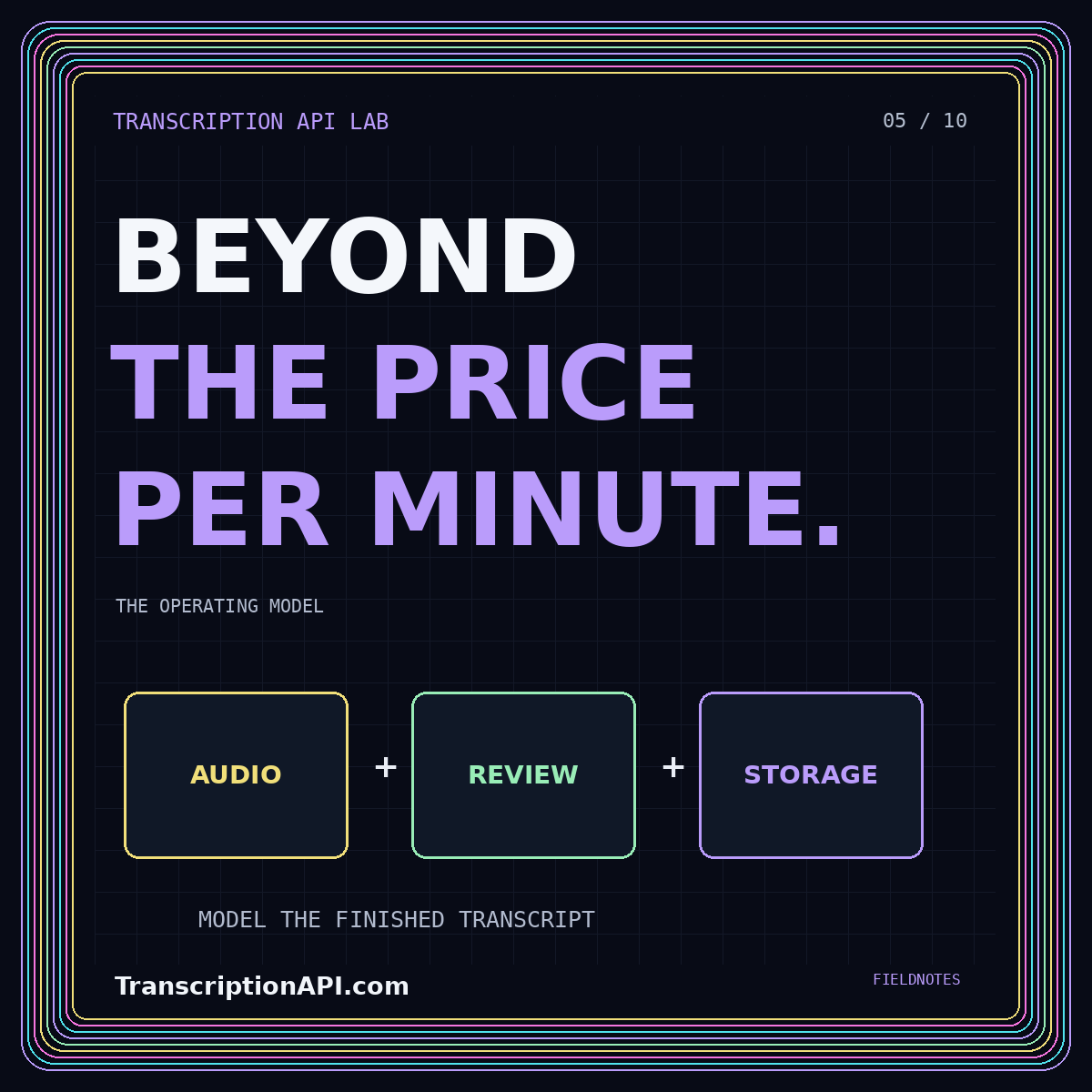
Transcription API service costs: budget for the finished transcript
Use a transparent hypothetical model to compare recognition, retries, storage, and the time spent reviewing results.
Read the field guideTRANSCRIPTION API LAB / CATEGORY
Design the parts around recognition: input validation, durable jobs, cost assumptions, and operational recovery. These guides focus on how an application behaves when real recordings and imperfect networks replace a controlled demonstration.
Start with the integration guide to define asset and job identity. Move to audio quality when failures depend on the source, and use the cost model when comparing complete workflows. Treat the examples as architecture recommendations and hypothetical calculations, not as endpoint documentation or service guarantees.
03 FIELD GUIDES / API ENGINEERING
Use a transparent hypothetical model to compare recognition, retries, storage, and the time spent reviewing results.
Read the field guide
Inspect codecs, channels, clipping, and conversions before changing the recognizer. Keep every processing step reversible.
Read the field guide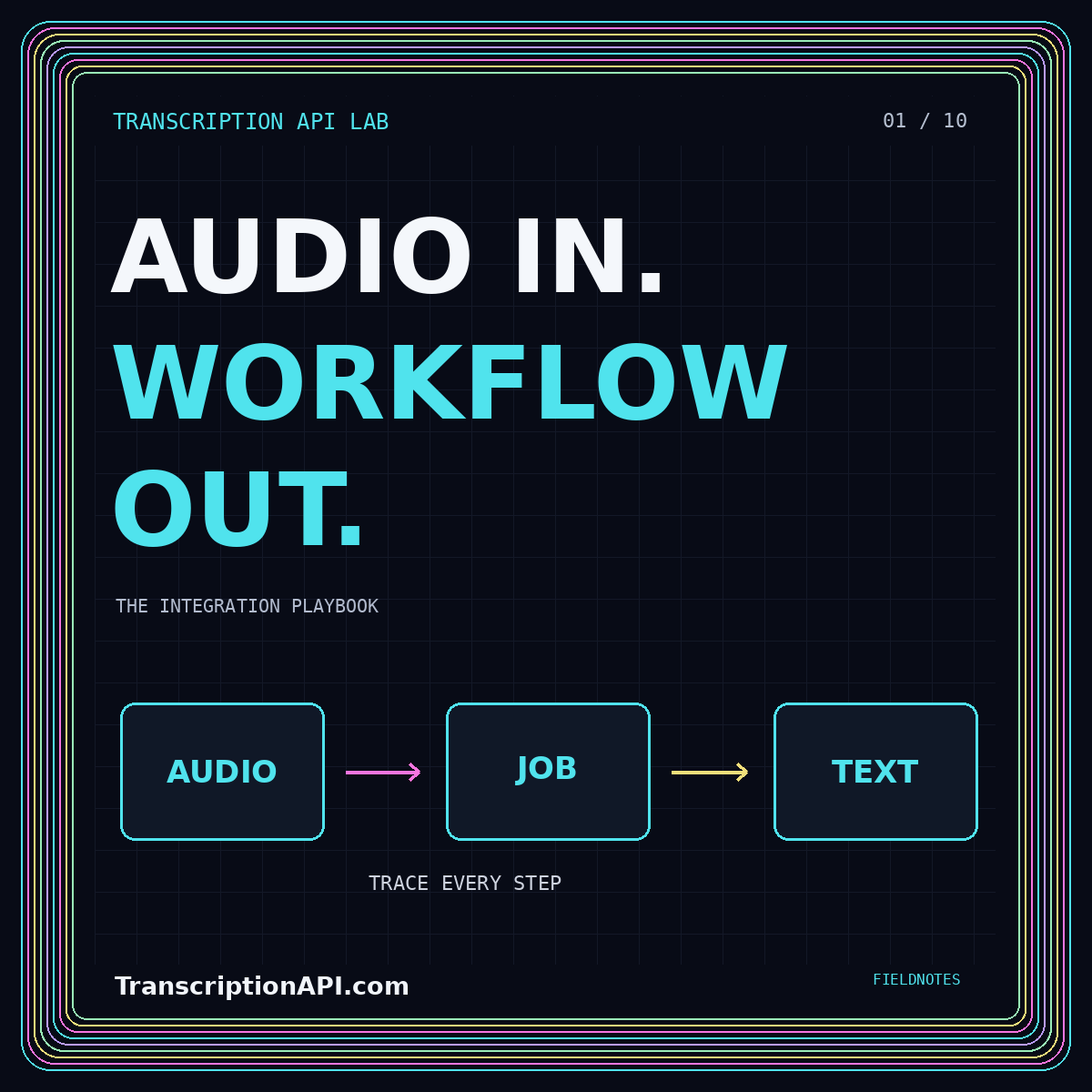
Design durable jobs, clear response contracts, bounded retries, and a review step that keeps every transcript traceable.
Read the field guideCONNECT THE IDEAS
Evaluate service fit through usable output, transparent assumptions, and clear ownership.
Read the overviewDiagnose and improve the audio boundary for calls, dictation, and voice notes.
Read the overviewDesign the contract between audio intake, recognition, review, and publication.
Read the overviewHave a correction, a topic suggestion, or a workflow worth exploring?